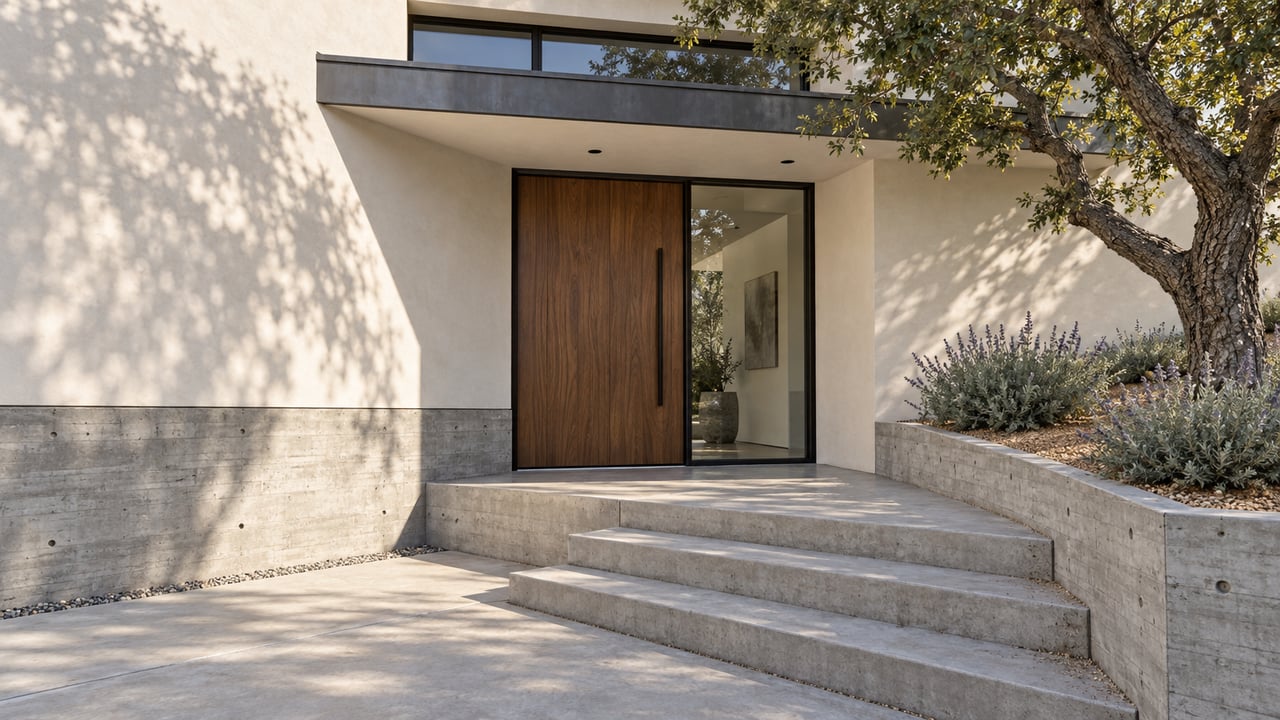
In Encino, the Hillside Premium Isn't About the View. It's About the Paperwork.
October 1, 2026
October 1, 2026
Ask an Encino hillside owner why a remodel bid came back at nearly double what a flatland neighbor paid for a similar-sized kitchen, and the honest answer rarely starts with cabinetry or appliances. It starts with a soils report.
That single line item, and the permitting process wrapped around it, is the part of Encino's price story that gets skipped over whenever someone points at a map and says the hills cost more because of the view. The view is real. So is the privacy, the larger lot, the quiet that comes with a long driveway instead of a sidewalk. But none of that fully explains why a home a few blocks south of Ventura Boulevard can carry a price tag two to three times higher than a comparable-sized home a few blocks north, even when the finishes and square footage look nearly identical on paper.
The better explanation sits in the building department, not the listing photos.
Encino's median sale price over the three months ending May 2026 was $1.7 million, up 6.9 percent from the same period a year earlier. That number gets repeated often, and it flattens a market that is actually split in two.
North of Ventura Boulevard, in the 91316 flatlands stretching toward the Sepulveda Basin, homes in 2026 have typically priced between $600,000 and $2 million. South of Ventura, where the land climbs into the hills toward Mulholland, homes have typically run $2.5 million to $8 million or more. One local pricing analysis this year put the gap between the two sides at roughly 130 percent at the upper end, a spread wide enough that a buyer comparing listings by zip code alone can be off by seven figures before ever touring a property.
The boulevard itself is the dividing line, not the school zone, not the shopping center, not even the zip code boundary exactly. Two homes can sit within a few blocks of each other, both technically inside 91436, and still land in very different price tiers depending on whether the lot is flat or terraced.
Here is the part that surprises buyers who assume the hillside premium is purely aesthetic. A meaningful share of that gap traces back to construction friction that flatland properties simply never encounter.
Hillside parcels in Encino frequently fall inside Los Angeles's Very High Fire Hazard Severity Zone, which comes with yearly defensible-space maintenance requirements that flatland owners don't have to think about. Any substantial remodel or rebuild on a sloped lot also tends to trigger additional steps under the city's hillside construction rules, including soils or geotechnical studies and grading permit review before a contractor can touch a foundation. None of that is optional, and none of it is fast. A flatland remodel in the 91316 corridor might move from permit application to demolition in a matter of weeks. A comparable hillside project south of Ventura can spend months in geotechnical review before a shovel goes into the ground.
That difference shows up twice in the price. It shows up once in what a seller can justify charging for a lot that has already cleared those hurdles, and again in what a buyer needs to budget if the property hasn't.
| North of Ventura (91316) | South of Ventura (91436) | |
|---|---|---|
| Typical 2026 price band | $600,000 to $2 million | $2.5 million to $8 million or more |
| Typical lot | Flat, standard grading | Larger, often terraced or sloped |
| Extra due diligence | Standard home inspection | Soils/geotechnical report, grading permit history, defensible-space documentation |
| Days on market (well-priced homes) | 25 to 40 days | 25 to 40 days, longer if geotech issues surface |
Buyers comparing Encino properties by price per square foot run into a second distortion once they cross into the hills.
On a flat, usable lot, price per square foot behaves the way it does in most of Los Angeles. A bigger, better-finished home costs more per foot. On a hillside lot, that relationship can invert. A very large home on a very large sloped parcel can show a lower price per square foot than a smaller, highly finished flatland property nearby, because so much of the hillside price is attached to the land itself rather than the structure sitting on it. The lot supports a pool, a guest structure, an ADU, or simply privacy that no amount of finish work can replicate on a smaller flat parcel.
That means a hillside listing that looks like a bargain on a per-square-foot basis may not be one. And a flatland listing that looks expensive per square foot may be priced correctly once you account for how little land is actually included. Reviewing both numbers, the total price and the price per square foot, before drawing conclusions about value is the only way to avoid being misled by either one in isolation.
For a buyer looking at a hillside property south of Ventura, the practical takeaway is to ask for the property's permit and geotechnical history before waiving an inspection contingency. A home with a documented soils report on file and a clean grading history is a very different purchase than one where that work still needs to happen after closing. Agents active in Encino this year report that well-priced homes are moving in 25 to 40 days, while overpriced listings are sitting 60 to 90-plus days and taking price reductions of $50,000 to $250,000. On the hillside side, a chunk of those overpriced, slow-moving listings are homes where the seller priced against the view and the buyer's inspector found a retaining wall or drainage issue that triggers the exact geotechnical review the price didn't account for.
For a seller on the flats, the lesson runs the other direction. A flatland home north of Ventura shouldn't be priced or marketed against hillside comps just because both carry the Encino name. The buyer pool is different, the carrying costs are different, and the due diligence timeline is different. Leaning into what the flats actually offer, easy grading, straightforward permitting, walkable proximity to Ventura Boulevard's restaurants and Erewhon Market, is a more accurate pitch than borrowing language from a listing three blocks up a hill.
For investors and developers looking at either side, the math changes again. A flatland fixer near the Sepulveda Basin is a more predictable renovation timeline. A hillside value-add property near Royal Oaks or Amestoy Estates carries more upside if the lot is large and usable, but only after pricing in the months a geotechnical review can add before construction even starts.
Does a home's zip code tell me which side of Ventura it's on? Not reliably. Both 91316 and 91436 stretch across parts of the boulevard, and the price tier depends more on the specific street and terrain than the zip code printed on the listing.
Do all hillside remodels in Encino require a geotechnical report? Not every project, but any substantial remodel or rebuild on a sloped lot is likely to trigger soils and grading review under the city's hillside construction rules. Confirming this before writing an offer, rather than after, is the difference between a predictable timeline and a stalled one.
Is the flats side of Encino a lesser market? No. It's a different one, with its own buyer pool that values flat grading, easy permitting, and walkable access to Ventura Boulevard over hillside privacy and views.
If you're weighing a hillside estate against a flatland home in Encino, or trying to price one correctly on either side of the boulevard, Tammy Jerome can walk you through the comps, the permit history, and what your specific street actually supports. Let's Connect.
October 1, 2026
September 24, 2026
September 17, 2026

September 12, 2026
It's not just about sitting on the market longer. Overpricing can quietly cost you money, negotiating power, and the one window you can't get back.

September 12, 2026
Selling a condo isn't just selling a smaller house. You're selling a unit, a building, a community, and a financial ecosystem all at once. Here's how to get it right.

September 12, 2026
When one spouse or sibling isn't on board, selling becomes less about real estate and more about communication, timing, and strategy.
September 12, 2026
Hoping the market sorts itself out usually means fewer showings and lower offers. Here's what a real listing plan does instead.

September 12, 2026
It sounds precise, and it's the number everyone reaches for. But lean on it too hard when buying or selling in LA, and it can quietly steer you off course.

September 12, 2026
Some neighborhoods attract buyers no matter what the market is doing. Here's what sets them apart and what it means for your home.
Get assistance in determining current property value, crafting a competitive offer, writing and negotiating a contract, and much more. Contact me today.