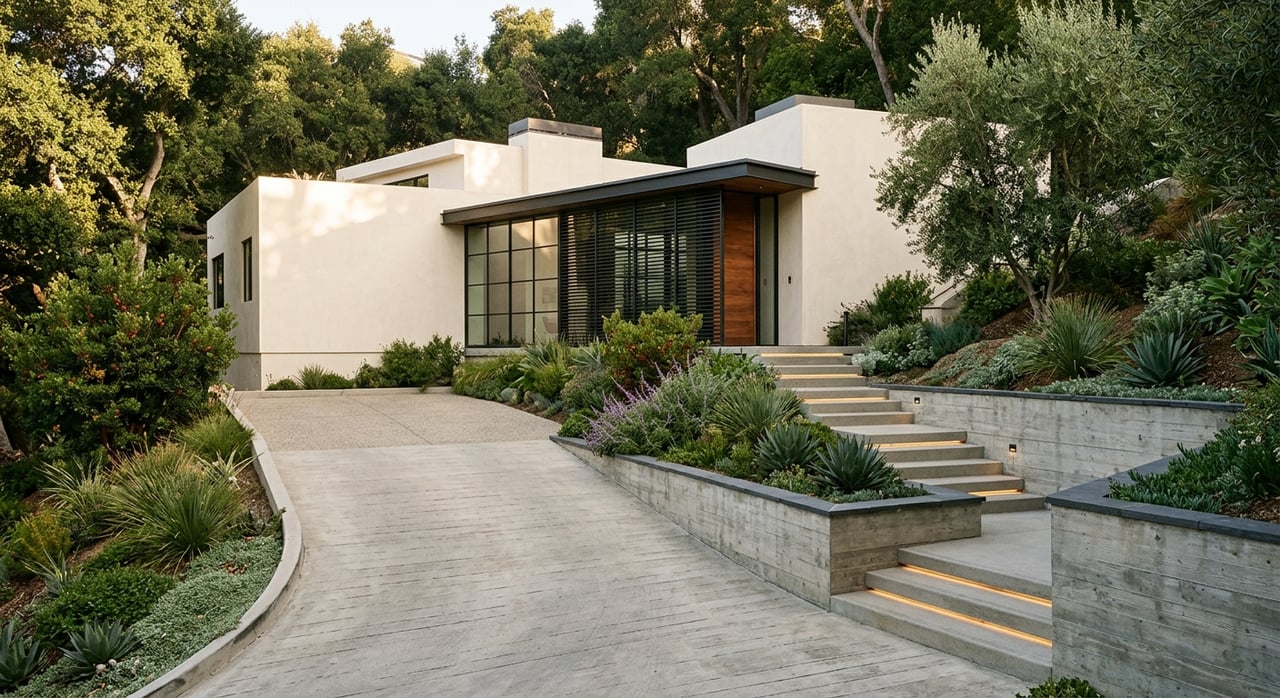
What To Know Before Buying A Home In The Hollywood Hills
June 25, 2026
June 25, 2026
Buying in the Hollywood Hills can feel exciting right up until you realize the house is only part of the decision. In this part of Los Angeles, the lot, the street, the slope, and the fire-access details can matter just as much as the floor plan or the view. If you are thinking about buying here, this guide will help you focus on the issues that most affect safety, cost, remodel plans, and long-term resale. Let’s dive in.
In the Hollywood Hills, a beautiful home can come with extra layers of review that are far less common in flatter neighborhoods. Zoning, hillside rules, access conditions, and wildfire-related requirements often shape what you can do with a property and what it may cost to own.
That does not mean buying here is a bad idea. It means you need to evaluate each property carefully, because two homes with similar prices can have very different upkeep needs, improvement options, and risk profiles.
Hillside real estate is highly site-specific. According to Los Angeles City Planning, zoning determines what can be built, how large it can be, and what parking or setback rules apply, but parcel-specific rules still need to be checked because general summaries do not capture every property condition.
That point matters even more in the Hollywood Hills, where some homes may also fall under the Baseline Hillside Ordinance, a specific plan, or an HPOZ. If you plan to remodel, expand, or rebuild in the future, those layers can affect both timeline and design.
One detail many buyers overlook is whether a lot fronts a standard or substandard hillside limited street. The City defines a substandard hillside limited street as one that is under 36 feet wide or paved to less than 28 feet.
That classification can trigger different parking, street-dedication, and fire-protection requirements. In practical terms, a narrow hillside street can affect not just convenience, but also development options and emergency access.
Slope is not just a visual feature. City guidance says applicants may need a slope analysis map prepared by a California-registered civil engineer or licensed land surveyor, and LADBS states that grading permits in the Hillside Grading Area usually require a soils or geology report.
Those reports can address slope instability, earthquake-induced landslides, and liquefaction. If you are considering a property with steep topography, retaining walls, or future construction plans, these issues deserve attention early.
In the Hollywood Hills, fire access is a core buying issue. The area is treated within Los Angeles’s Very High Fire Hazard Severity Zone framework, which includes Hollywood and many of the city’s hilly and mountainous areas.
That affects how you should evaluate a driveway, gate, private road, or long approach to the house. A property can feel private and tucked away, but that same setup may raise important access questions.
The hillside code requires at least two covered parking spaces for a one-family dwelling in a private garage and sets a minimum access driveway width of 9 feet. Tandem and lift-based parking may be allowed in some cases.
LAFD Firewise guidance recommends a 12-foot-wide driveway, 15 feet of vertical clearance, and less than 5 percent slope for emergency access. Those figures are important when a listing has a long driveway, tight turns, or mature landscaping near the approach.
If the home has a gate, do not assume it is compliant for fire access. LAFD reviews roadway width, turnarounds, turning radii, grades, parking restrictions, overhead clearances, load capacity, and secured entrances.
Its gate standards say gates cannot reduce the required roadway width below 20 feet free and clear. For buyers, that means privacy features should be evaluated alongside emergency access requirements.
Wildfire planning in the Hollywood Hills is not just about peace of mind. It can directly affect your maintenance schedule, upgrade budget, and insurance options.
LAFD brush-clearance rules require year-round vegetation management in VHFHSZ areas. That includes vegetation management within 200 feet of structures and within 10 feet of combustible fences or roadways and driveways.
Before you buy, ask whether the property is in the VHFHSZ and request the brush-clearance history, any notices, and the home’s status in LAFD’s system. This can help you understand whether the seller has kept up with required maintenance.
It also gives you a better picture of future carrying costs. In hillside areas with narrow roads and tight curves, the City has also created red-flag parking programs because blocked roads can affect evacuation.
Some hillside homes already have wildfire-related improvements, while others may need them. The Baseline Hillside Ordinance requires automatic fire sprinklers for new one-family homes on certain hillside lots and for some major additions or remodels.
LAFD’s fire-zone guidance also points buyers toward AB38 retrofit guidance for homes in the VHFHSZ. If you are purchasing an older home, it is smart to ask what upgrades have already been completed and what may still be needed.
Insurance should be part of your early due diligence, not a last-minute task. The California Department of Insurance says the FAIR Plan serves as the state’s insurance safety net for Californians who cannot obtain coverage from a regular insurance company.
It also notes wildfire-hardening discounts on the wildfire portion of FAIR Plan premiums. Even if a home checks many boxes, you want a clear insurance picture before you finalize your offer strategy.
One reason buyers love the Hollywood Hills is the range of architectural styles. You may see Spanish Colonial Revival, Mediterranean Revival, traditional cottage-and-villa designs, and iconic mid-century modern homes, sometimes within a short distance of one another.
That variety adds character, but it can also come with design controls. In some areas, the home’s setting and architectural context are part of what the City seeks to preserve.
Hollywoodland is a strong example of how design and terrain interact. Its specific plan was created to protect ridgelines, preserve natural setting and architectural character, improve fire access on narrow winding streets, and keep development compatible with the existing area.
If a property sits within a specific plan area, your future exterior changes may be more regulated than you expect. That can include additions, visible exterior materials, and site work.
If the property is in an HPOZ, exterior changes are subject to added review. City Planning states that HPOZs require new projects to complement the historic character of the district, and exterior work such as landscaping, alterations, additions, and new construction may need additional review.
For a buyer, this is especially important if you are counting on changing windows, decks, finishes, retaining walls, or pool areas after closing. Whitley Heights is one example where historic overlay and hillside conditions can overlap.
Hollywood Hills remains a high-priced market, but values can vary sharply depending on the pocket. Zillow reports an average home value of about $1.95 million as of May 31, 2026, with homes pending in around 40 days, while Realtor.com reports a median listing price of $1.9 million and homes selling at about 98 percent of asking in May 2026.
Those sources use different metrics, but they point to the same takeaway. This is a market where property-specific features matter, and the spread between areas can be significant.
Realtor.com shows median listing prices around $845,000 in Whitley Heights, $3.389 million in Outpost, and $3.3425 million in Mount Olympus. That suggests access, views, lot size, privacy, and neighborhood-specific rules can all influence value and resale.
The right questions can save you time, money, and stress later. In the Hollywood Hills, you want answers that go beyond finishes and square footage.
Ask these questions before you move forward:
A Hollywood Hills purchase often benefits from specialized guidance. Based on the city’s permitting and safety requirements, the most useful professionals may include a local agent with hillside experience, a licensed surveyor or civil engineer for slope analysis, a geotechnical engineer for soils and grading, fire-development staff for access and brush rules, and an insurance broker familiar with wildfire-prone properties.
That kind of preparation can help you make a more confident decision. It can also help you spot the difference between a manageable hillside property and one that may carry more risk, cost, or limitations than you want.
If you are planning to buy in the Hollywood Hills, local knowledge matters because no two properties are exactly alike. Working with an experienced neighborhood advisor can help you weigh views, value, access, and long-term usability with a clear eye. When you are ready to explore homes or evaluate a specific property, connect with Tammy Jerome Real Estate.
August 6, 2026
August 6, 2026
July 23, 2026
July 16, 2026
July 9, 2026
July 2, 2026
June 25, 2026
June 18, 2026
June 11, 2026
Get assistance in determining current property value, crafting a competitive offer, writing and negotiating a contract, and much more. Contact me today.