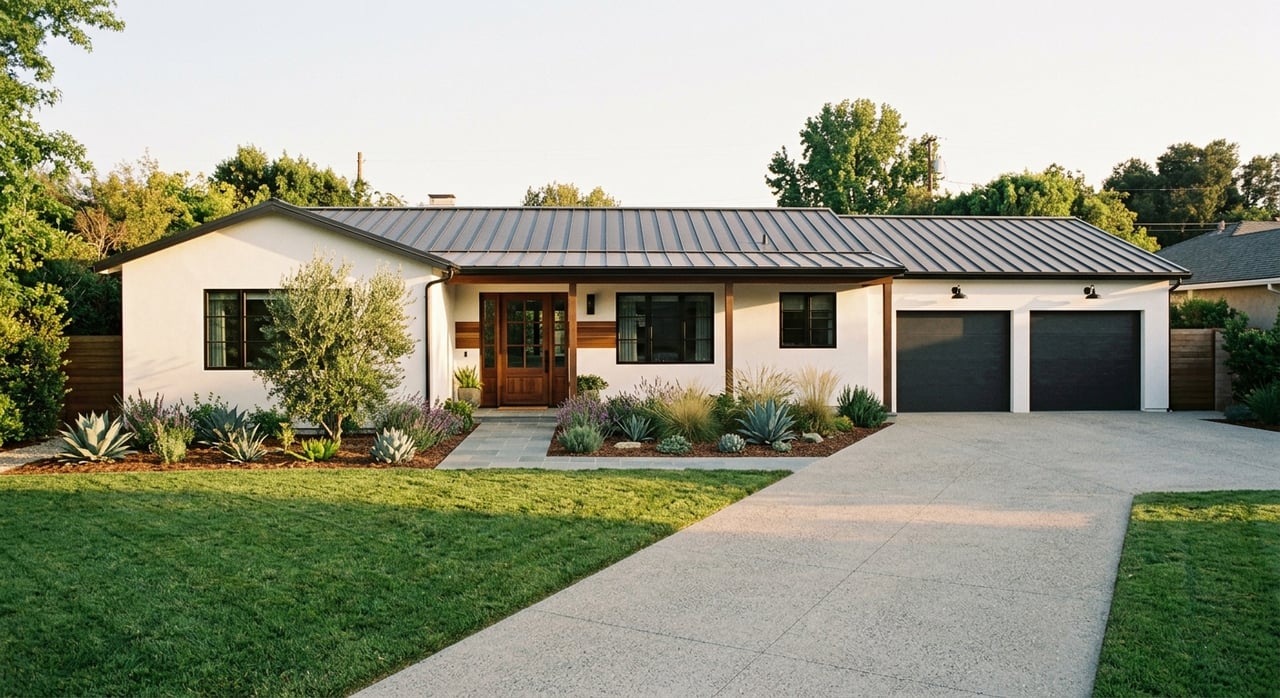
Valley Village Single-Family Homes: What Buyers Should Expect
June 4, 2026
June 4, 2026
If you are shopping for a single-family home in Valley Village, you are not looking at a one-note neighborhood. You are looking at a place where classic one-story homes, expanded properties, and large newer rebuilds can all show up in the same search. That can feel exciting, but it also means you need to know what is typical, what is premium, and what details really matter before you make an offer. Let’s dive in.
Valley Village is part of the North Hollywood–Valley Village Community Plan area, and the City describes it as a predominantly single-family neighborhood. The Valley Village Specific Plan was created to help preserve that character, keep one-family lots in one-family use, and guide nearby multifamily and commercial development so it works more compatibly with surrounding homes.
For buyers, that planning context matters because it helps explain why Valley Village often feels low-rise and house-oriented. The plan includes height, setback, landscaping, and open-space rules, especially near one-family lots, which can shape how a block feels today and how nearby properties may evolve over time.
In pricing terms, current market snapshots place Valley Village single-family homes in the low-to-mid $1 million range overall. Recent reports show a median sale price around $1.212 million, an average home value around $1.261 million, and a median listing price around $1.30 million.
The pace is active, but not overly rushed. Homes are taking roughly 34 to 61 days to go pending or sell depending on the source and time period, and recent snapshots show around 62 to 65 homes for sale, with 37 sales reported in one recent month.
One reason Valley Village appeals to many buyers is that the neighborhood often offers a more yard-friendly feel than denser parts of Los Angeles. Historic coverage has described the area as a place of roughly 1,700-square-foot, single-story Spanish and ranch homes on nice-size lots.
A 2024 Los Angeles Planning existing-conditions report uses a 7,950-square-foot lot as a typical Valley Village benchmark in its study area. That does not mean every lot is the same, but it gives you a useful frame of reference when you compare homes.
In practical terms, many properties feel suburban without feeling oversized. You may have enough room for a backyard, patio, pool potential, or an expanded footprint, but lot width, setbacks, garage placement, and the shape of the parcel can still make one home feel much more functional than another.
Valley Village still has a meaningful number of older single-family homes, and many are one story. City historic-district documentation identifies styles such as Traditional Ranch, Minimal Traditional, Craftsman, Colonial Revival, Tudor Revival, and Spanish Colonial Revival.
If you like charm, that is good news. You may find original details, practical single-level layouts, and houses that reflect the neighborhood’s older residential character.
This is not a neighborhood where every home has stayed exactly as built. The same city survey notes recent infill and second-story additions, so buyers should expect a mix of original homes and properties that have been enlarged over time.
That means square footage alone does not tell the full story. Two homes with the same bedroom count may live very differently depending on where the addition was placed, how the rooms connect, and whether the expansion feels cohesive with the original house.
Recent active inventory also shows that larger rebuilt homes and new construction are part of the Valley Village market. Current examples include sizable new homes with modern layouts, larger bedroom counts, and substantially higher price points than older originals.
This creates a split market. On one side, you have more modest original homes. On the other, you have premium rebuilds and new construction that can reach the mid-$3 million to mid-$4 million range.
Current listings give a helpful snapshot of what buyers may see in Valley Village:
The key takeaway is simple: Valley Village single-family inventory is not one uniform product. Budget, lot quality, layout, renovation level, and overall finish can move pricing in a big way.
In Valley Village, it is easy to focus on bedroom count or total size. But because the market includes older homes, additions, remodels, and rebuilds, layout efficiency often matters just as much as raw square footage.
A smaller original home with a smart floor plan may feel better day to day than a larger house with awkward circulation. Likewise, a remodel that opens up living space and improves indoor-outdoor flow can change how a home lives without pushing it into an entirely different price category.
When you tour homes, pay attention to:
Valley Village has a long history of discussion around mansionization and out-of-scale development. City records from past council activity show that floor-area limits for single-family homes were actively debated, which helps explain why buyers today see a neighborhood shaped by both preservation concerns and redevelopment pressure.
For you as a buyer, that means renovation quality is not a minor detail. In many cases, the bigger question is not whether a house was updated, but how it was updated.
When you evaluate a remodeled or rebuilt home, it is smart to look closely at:
These details can affect not only your day-to-day enjoyment, but also future resale appeal.
The Valley Village Specific Plan helps preserve the neighborhood’s lower-rise character. It limits one-family buildings to 30 feet and multifamily buildings to 36 feet, while also applying added rules for buffering, setbacks, landscaping, and open space near RW1 lots.
You do not need to memorize planning language, but you should understand the practical benefit. These rules help support a house-oriented environment and can influence how neighboring properties relate to one another, especially near transitions between single-family areas and more intense uses.
That context can be especially helpful if you are comparing homes on a quiet interior street versus homes closer to major corridors. The block-by-block feel may vary, even within the same neighborhood name.
Because Valley Village includes both classic originals and high-end rebuilds, the smartest buyers stay focused on value drivers rather than headlines. A larger home is not automatically the better buy, and a lower price does not always mean better value.
A strong buying strategy usually starts with a few clear questions:
Ask yourself whether you want:
Each option can make sense. The right choice depends on your budget, your timeline, and how much work or customization you want to take on.
In Valley Village, the lot is part of the value story. A typical lot may be around 7,950 square feet, but two lots with similar square footage can feel very different depending on width, shape, backyard usability, and placement of the home.
That is why it helps to compare site layout as carefully as you compare kitchens and bathrooms. Outdoor function can be a major part of what you are really buying.
Because this neighborhood has such a broad range of housing product, bedroom count can be misleading. A 4-bedroom original home, a 4-bedroom expansion, and a 4-bedroom rebuild may sit at very different price points and offer very different day-to-day experiences.
Focus on how the property actually lives. Think about room sizes, storage, light, privacy, and flow.
Most buyers should be prepared for Valley Village single-family homes to start in the low-$1 million range and climb meaningfully from there depending on size, condition, and lot quality. Smaller original homes can still sit near the lower end of the neighborhood’s range, while larger rebuilt homes can reach well above $3 million.
That spread is exactly why local guidance matters. In a neighborhood where an original ranch, a partial remodel, and a new-construction home may all compete for attention, the best decision often comes down to understanding what is typical for that street, that lot, and that price point.
If you are thinking about buying in Valley Village, working with someone who knows how to evaluate originals, remodels, and rebuilds can help you move with more clarity and confidence. To start your search with local insight and experienced guidance, connect with Tammy Jerome Real Estate.
September 17, 2026

September 12, 2026
It's not just about sitting on the market longer. Overpricing can quietly cost you money, negotiating power, and the one window you can't get back.

September 12, 2026
Selling a condo isn't just selling a smaller house. You're selling a unit, a building, a community, and a financial ecosystem all at once. Here's how to get it right.

September 12, 2026
When one spouse or sibling isn't on board, selling becomes less about real estate and more about communication, timing, and strategy.
September 12, 2026
Hoping the market sorts itself out usually means fewer showings and lower offers. Here's what a real listing plan does instead.

September 12, 2026
It sounds precise, and it's the number everyone reaches for. But lean on it too hard when buying or selling in LA, and it can quietly steer you off course.

September 12, 2026
Some neighborhoods attract buyers no matter what the market is doing. Here's what sets them apart and what it means for your home.
September 10, 2026
September 3, 2026
Most sellers wait for spring, which is exactly why fall can work in your favor. Here's what a fall listing gets you in Southern California.
Get assistance in determining current property value, crafting a competitive offer, writing and negotiating a contract, and much more. Contact me today.