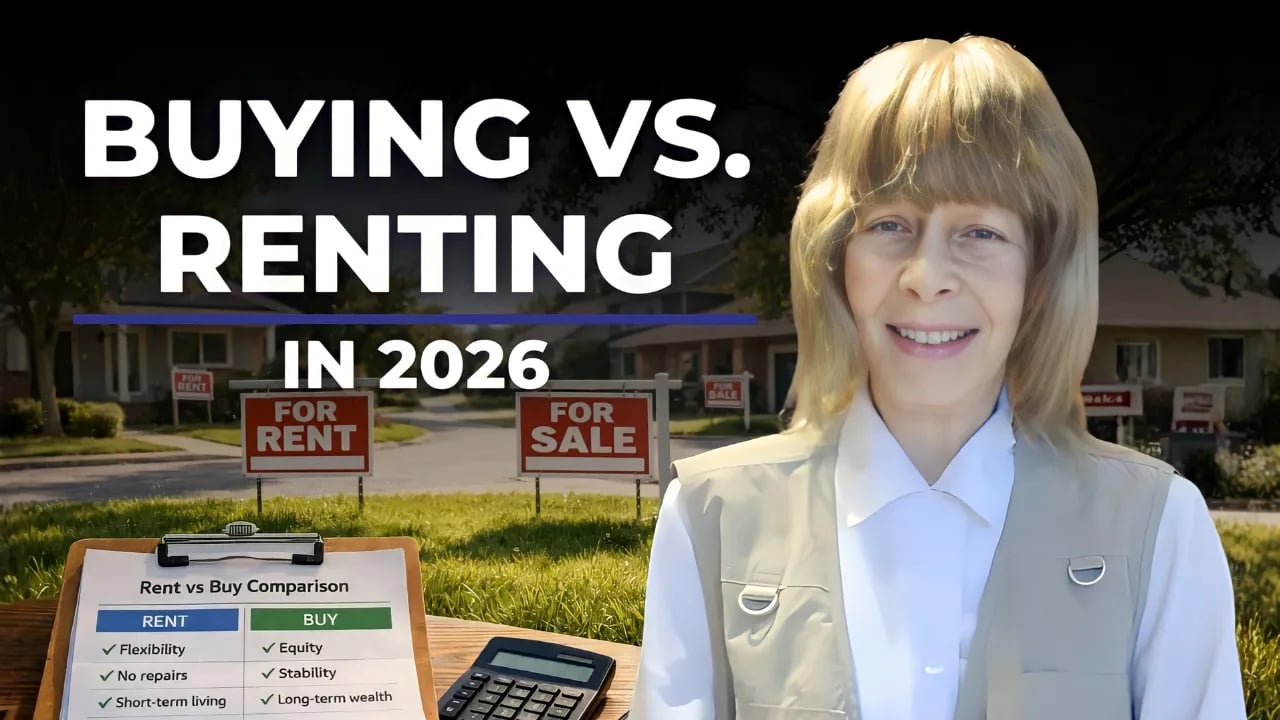
The Pros and Cons of Renting vs. Buying a Home
March 30, 2026
March 30, 2026
If we were standing in a crowded Trader Joe’s parking lot and you asked me for my honest opinion about whether you should keep renting or finally buy a home, what do you think I’d say?
Honestly, there’s no universal answer.
Anyone who tells you otherwise is probably just trying to justify their own personal choices. The conversation about renting versus owning shouldn’t turn into a debate about who is the “better adult.” It’s simply about choosing the option that fits your life.
At its core, this isn’t an emotional decision. It’s a strategic one. It comes down to flexibility versus control.
Renting gives you short-term flexibility, while owning gives you control, long-term security, and the chance to build wealth over time. Both cost money, both come with risks, and both can be smart decisions when they align with your lifestyle and goals. Let’s look at each side more closely.
Why do people choose to rent? Renting isn’t just for people who “aren’t ready yet.” There are real strategic reasons why renting can make sense.
● Flexibility. Renting allows you to change neighborhoods easily or follow a new job opportunity. In cities where traffic patterns change faster than dating apps, the ability to move without having to sell a home can be incredibly valuable. If you’re early in your career or simply not ready to commit to one location, renting can be a very practical choice.
● Predictable short-term costs. Rent is rent. You typically won’t face a surprise roof replacement or a plumbing emergency in the middle of the night. You also won’t deal with unexpected sewer repairs or other major maintenance costs. For people who want straightforward budgeting, renting can be simple and predictable.
● Opportunity cost. It’s also worth asking yourself, “If I don’t put money into a down payment, where else could that money go?” In some cases, that cash might be better used to grow a business, invest elsewhere, or maintain financial flexibility for emergencies.
What are the downsides of renting? The main drawback is that when rent increases, you don’t build any ownership along the way. You’re paying for a place to live, but you’re not building equity. In many ways, you’re contributing to someone else’s investment.
Renting also comes with limited control. Want to paint the walls, remodel a kitchen, or adopt a dog? Those decisions usually depend on the landlord’s rules.
What are the benefits of owning a home? On the other side of the equation, long-term wealth building rarely happens by accident. In areas where land is limited and demand remains strong, real estate has historically been a powerful way to build financial stability. As Mark Twain once said, “Buy land. They’re not making it anymore.”
Here are a few advantages of homeownership.
● Stability and predictability. With a fixed-rate mortgage, your largest monthly housing cost can remain predictable for years. While rent often increases over time, owning allows you to lock in your payment structure and plan ahead. That stability can provide both financial and emotional peace of mind.
● Equity and wealth. Real estate has long been considered a hedge against inflation. As you pay down your mortgage, you gradually build equity in the property. Instead of paying for housing alone, you’re investing in something you own and can benefit from over time.
● More options: Homeowners also have opportunities that renters typically don’t. You can refinance, rent the property out, add an accessory dwelling unit (ADU), or eventually sell the property. Renting offers convenience in the short term, but owning often creates more long-term possibilities.
What are the downsides of owning? Of course, I won’t pretend that homeownership is perfect. Buying a home requires capital for a down payment and closing costs. Even though there are loan programs that allow as little as 3% or 3.5% down, it is still a significant commitment.
Homeowners are also responsible for maintenance. Homes age, systems break, and repairs are inevitable. However, those costs go toward maintaining your own property rather than someone else’s investment. In some cases, certain expenses may also have tax advantages.
Real estate is not a liquid asset, meaning you cannot quickly convert it to cash the way you might with stocks or savings. That said, homeowners often have access to financial tools like home equity lines of credit if they need to access funds.
So, which one is better? Both renting and owning cost money, and both carry risks. The right decision depends on your current stage of life, your financial goals, and how long you plan to stay in one place.
If you’re trying to figure out which path makes the most sense for you, I’d be happy to help you run the numbers. Contact our team at (818) 903-5854 or email [email protected], and we can put together a personalized rent vs. buy comparison based on the neighborhoods you’re considering.

August 21, 2026
Find out why your condo sale can stall even when your own balcony is perfectly safe.
August 20, 2026
August 13, 2026
August 6, 2026
August 6, 2026
July 23, 2026
July 16, 2026
July 9, 2026
July 2, 2026
Get assistance in determining current property value, crafting a competitive offer, writing and negotiating a contract, and much more. Contact me today.