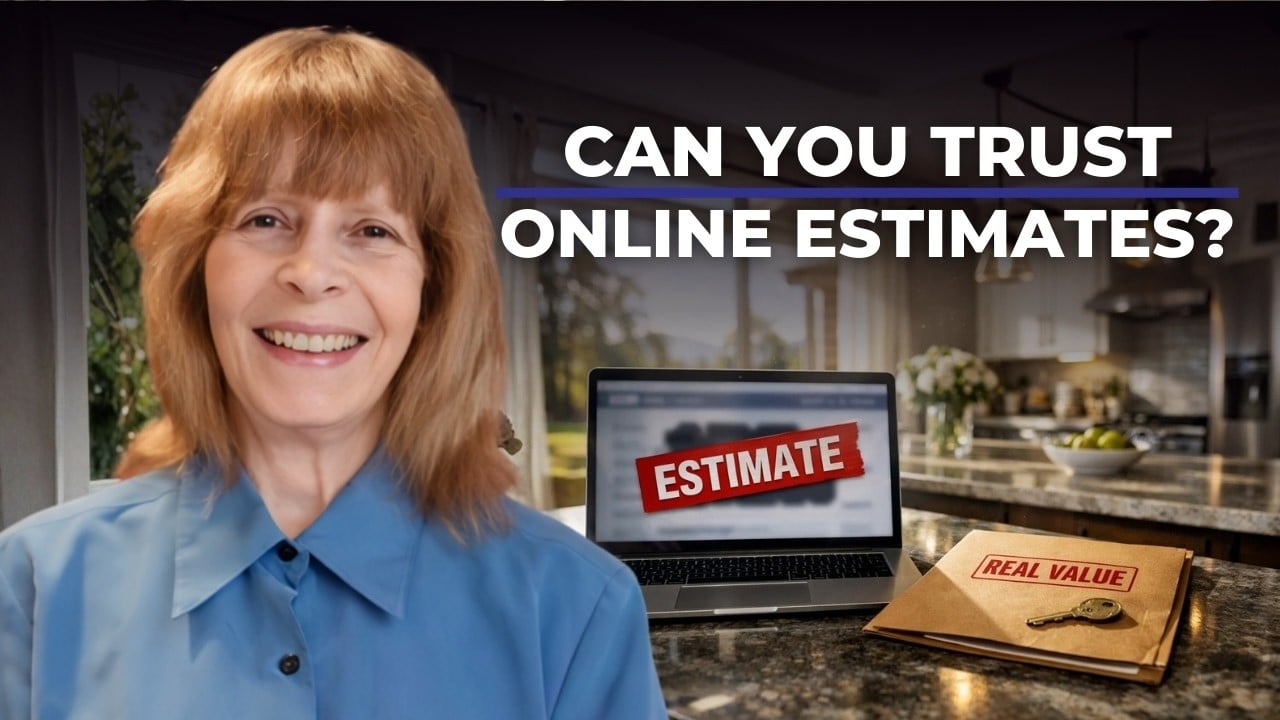
How Much Your Home Could Really Sell For (and What Online Estimates Miss)
April 10, 2026
April 10, 2026
It is tempting to type your address into an online home value tool and take that number at face value, especially when you are thinking about selling. It’s quick, easy, and oddly satisfying to see a big number pop up on the screen.
However, those online home value estimates are often closer to educated guesses than reliable answers. While they can be helpful as a general reference point, they are not accurate enough to base a major financial decision on.
Understanding why those numbers miss the mark can help you set better expectations when it is time to sell.
Online estimates rely on algorithms. These tools focus on details such as square footage, lot size, bedroom count, and recent sales in the surrounding area. While that information is useful, it only tells part of the story.
What these algorithms cannot see is just as important. They cannot evaluate a home’s condition, layout, upgrades, natural light, noise levels, views, or the overall feel of the property and the neighborhood. As a result, two homes that look nearly identical on paper can sell for very different prices in real life.
Pricing a home using only online data is similar to pricing a used car without ever looking under the hood.
The problem with “average” comparisons. Most automated home value tools compare your property to recent sales within a fixed radius, which sounds logical at first. The issue is that neighborhoods are rarely uniform, even within the same street.
One home may back up to a park or golf course, while another backs up to a busy road. One property may be fully updated, while another has not been renovated since the 1990s. When an algorithm averages all of these sales together, it smooths over the details that strongly influence buyer decisions and final sale prices.
Those missing details often explain why a home sells for more or less than an online estimate suggests.
Condition is king. Buyers don’t pay for square footage alone. Buyers do not pay for square footage alone. They pay for how a home feels when they walk through it.
Fresh kitchens, modern bathrooms, clean landscaping, and a layout that flows well can significantly increase what buyers are willing to pay. On the other hand, deferred maintenance, outdated finishes, and awkward layouts can quietly reduce a home’s perceived value.
Online tools cannot tell whether a home is move-in ready or a months-long project, but buyers can see that immediately and adjust their offers accordingly.
Timing matters. Your home’s value is not fixed, and it can shift based on market conditions. Buyer demand, inventory levels, and competition all play a role in how a home is priced and how quickly it sells.
A home listed during a period of high demand and low inventory may attract multiple offers, while the same home listed a few months later may experience a slower response. Online home value estimates tend to update slowly, which means they often miss short-term changes in buyer behavior and market momentum.
In practice, pricing a home is less about solving a formula and more about understanding current buyer activity.
Pricing strategy and marketing influence the final sale price. One factor that rarely shows up in online home value estimates is how the home is sold.
Pricing strategy, presentation, photography, marketing reach, and negotiation all influence the final sale price.
Two identical homes can sell for different amounts simply because one was priced strategically, presented well, and marketed effectively. The way a home is positioned in the market can shape buyer perception and urgency.
Selling a home is similar to selling concert tickets. Demand, timing, and promotion matter just as much as the product itself. Buyers are willing to pay more when:
These are human reactions, not algorithmic ones.
Online home value estimates can be a useful starting point, but they should not be treated as the final word on pricing. If you’re thinking seriously about selling, your home deserves a closer look than an algorithm can provide.
If you are thinking about selling and want a realistic idea of what your home could sell for, call me at (818) 903-5854 or send an email to [email protected] for a personalized market analysis based on current buyer activity.

May 21, 2026
May 14, 2026
May 7, 2026

April 23, 2026
April 16, 2026
April 10, 2026
It’s pretty fast, yes, but online home estimates can’t factor in your home’s unique features the way humans do.

April 9, 2026
Hackers use "spoofing" to steal funds right under your nose. I’m here to share the golden rule for secure transfers.
April 3, 2026
Waiting to buy or sell a house can feel like the safest option, but it often leads to higher costs, missed opportunities, and less flexibility over time.
April 1, 2026
Get assistance in determining current property value, crafting a competitive offer, writing and negotiating a contract, and much more. Contact me today.